 Shahria Emon
Why I built it
My household finances lived in Notion until Notion hit its block limit and entries stopped saving.
The small app I wrote next had every category, budget and card date written into the code, so changing the budget meant changing code.
Generic finance apps do not handle the way we actually track money:
- A card charge counts on the day it is spent, not the day the bill is paid.
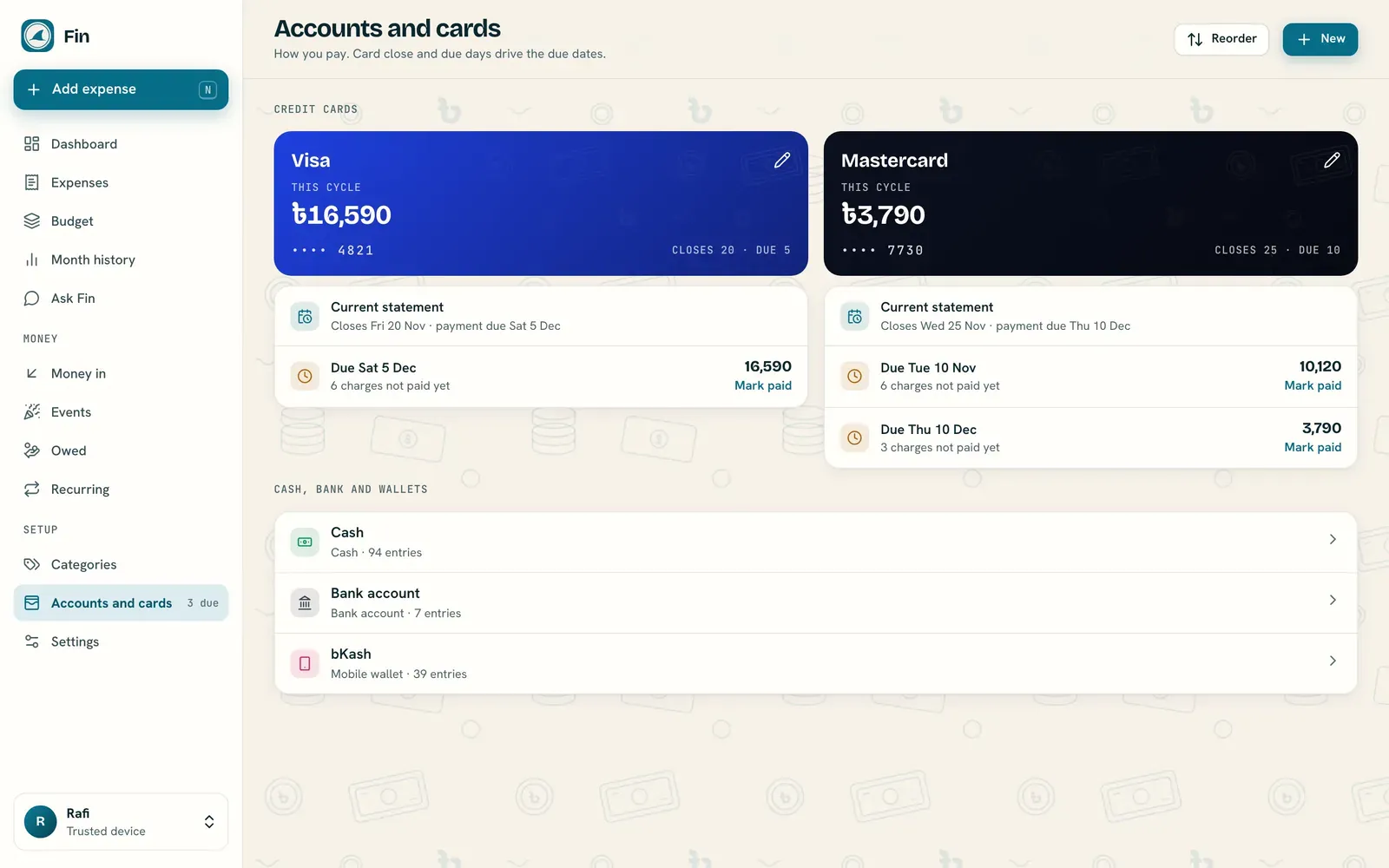
- Every card has its own closing and due days.
- A month that ends short carries the shortfall into the next one.
- Trips and events need their own budget.
- Entries come in Banglish.
What it does
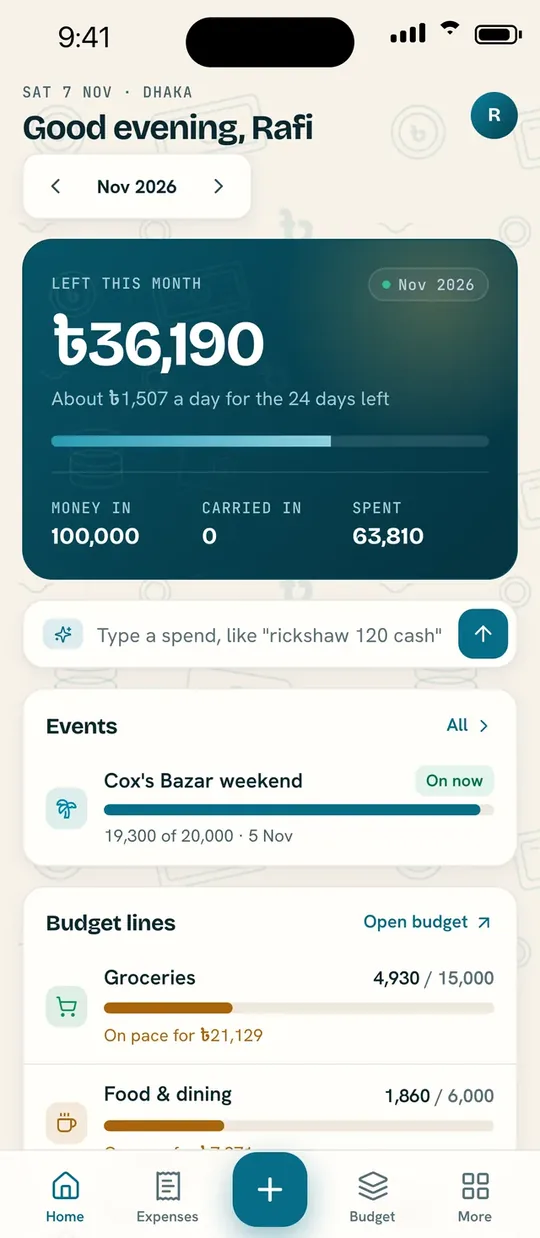
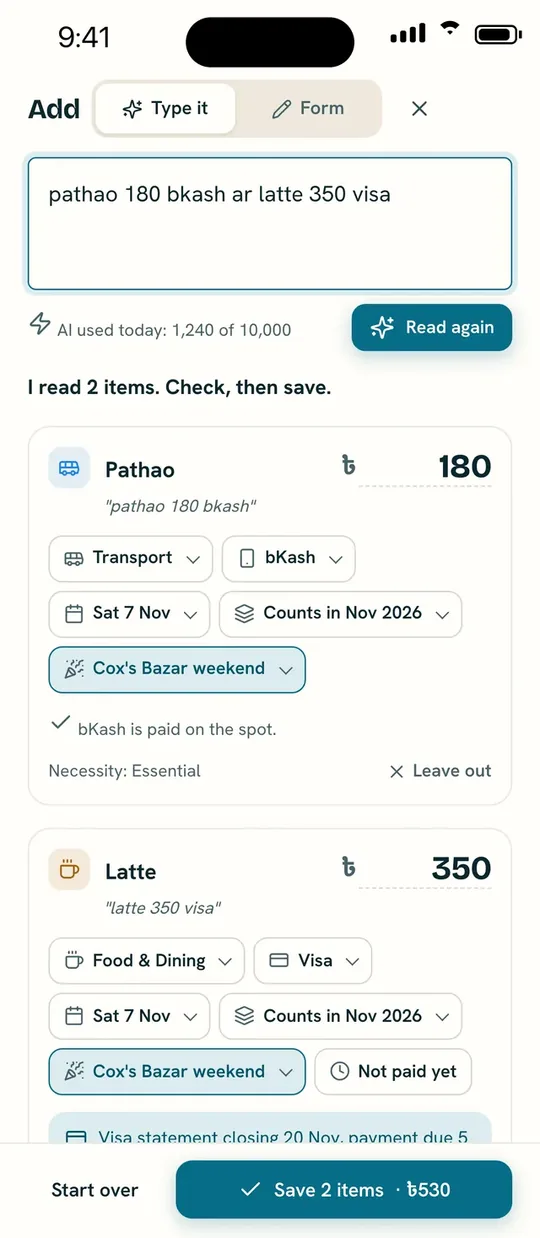
You type something like aj rickshaw 120 cash, bajar 2450 visa.
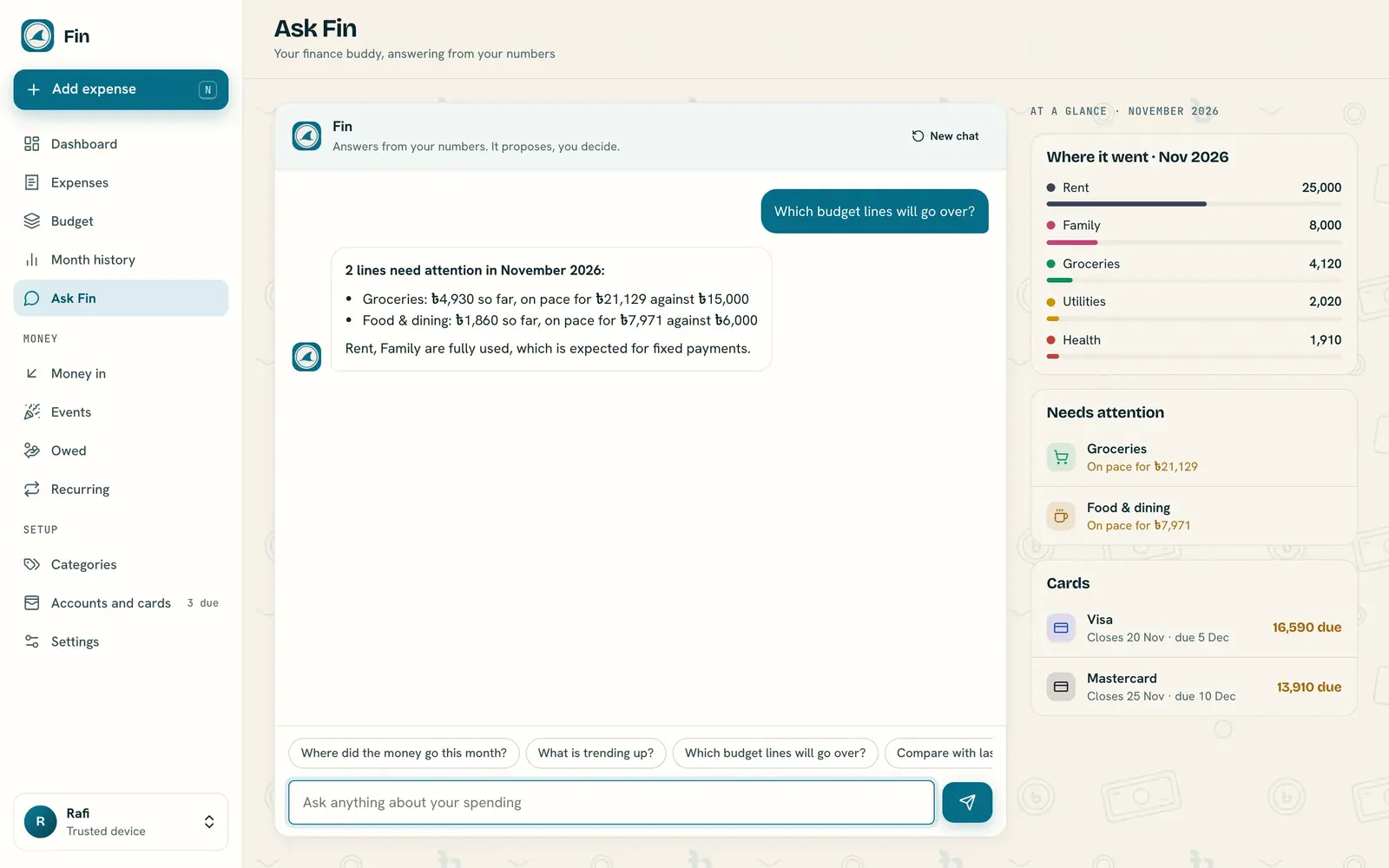
Fin splits it into two expenses with the right category and payment method, puts the card charge in the right card cycle, and shows them for you to confirm. The monthly budget, card due dates, trips and events update from there. Ask Fin answers plain questions about where the money went.
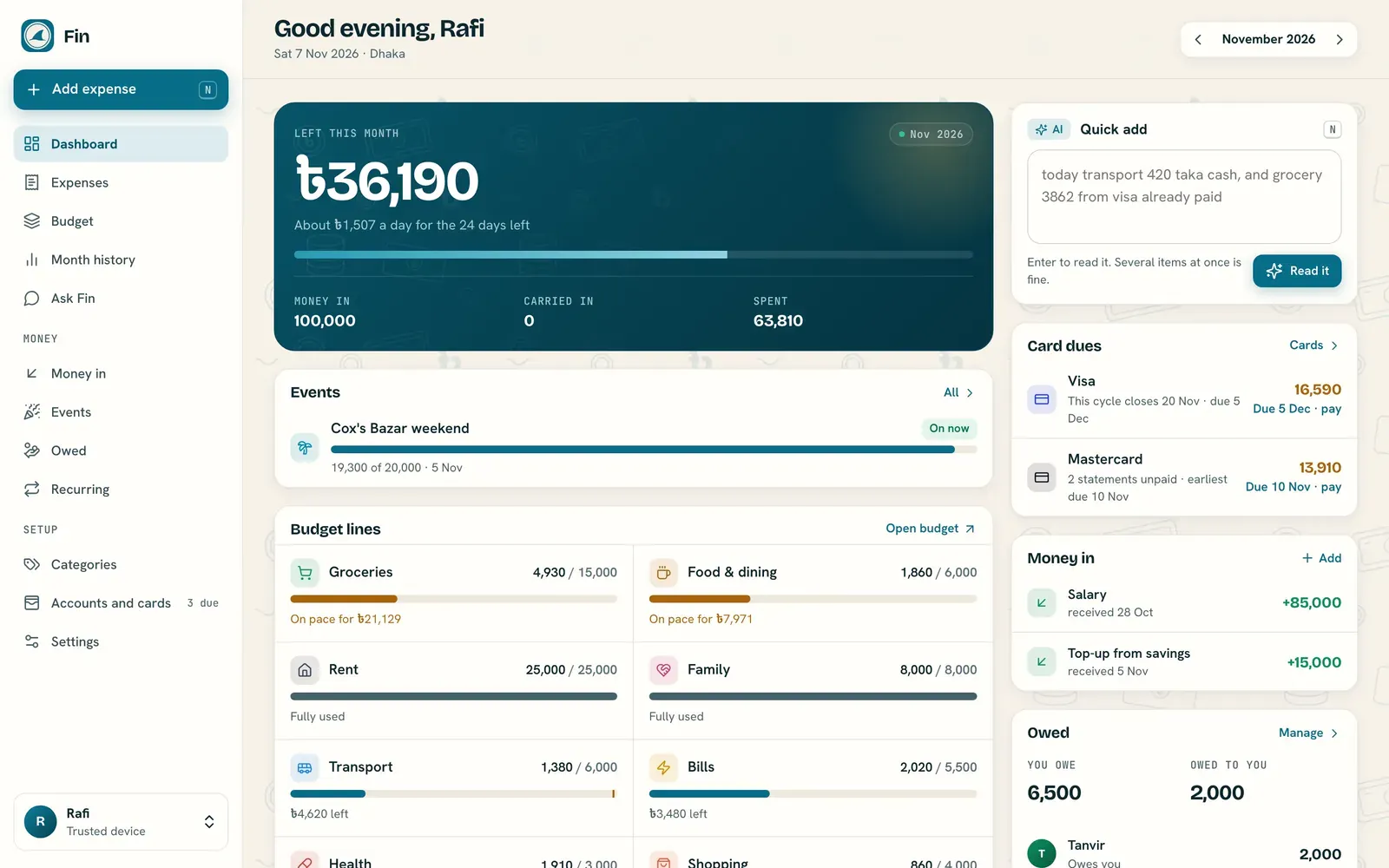
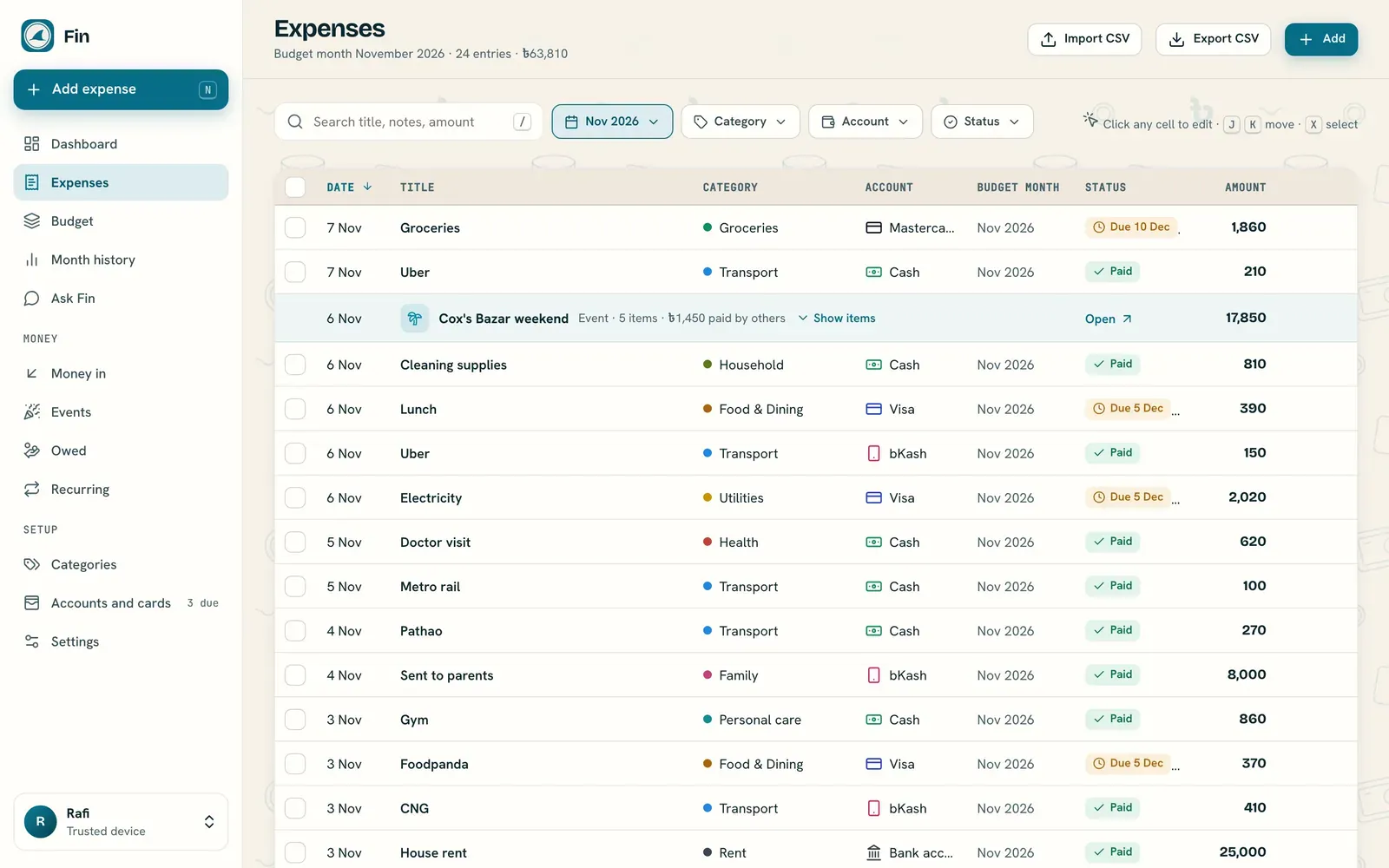
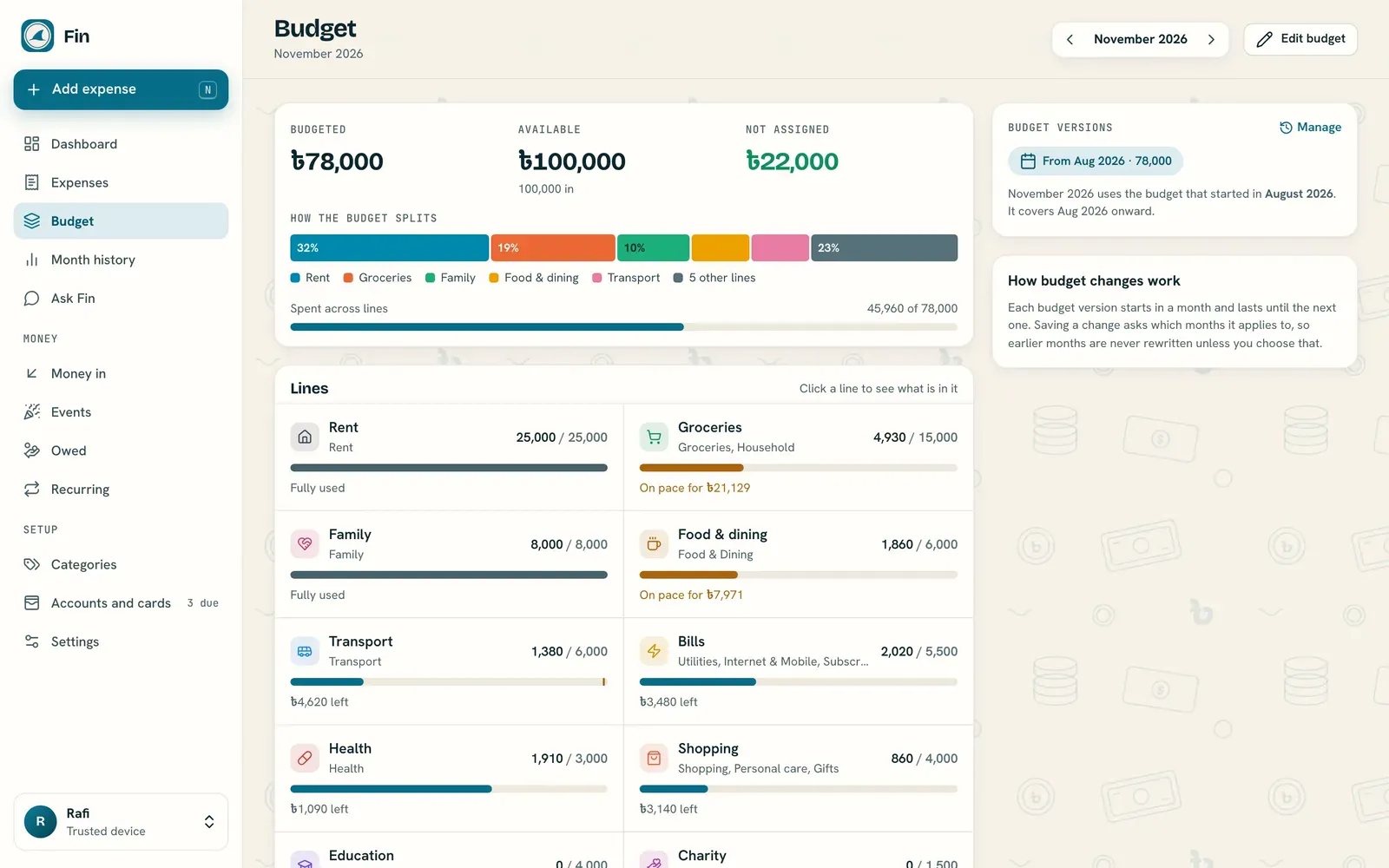
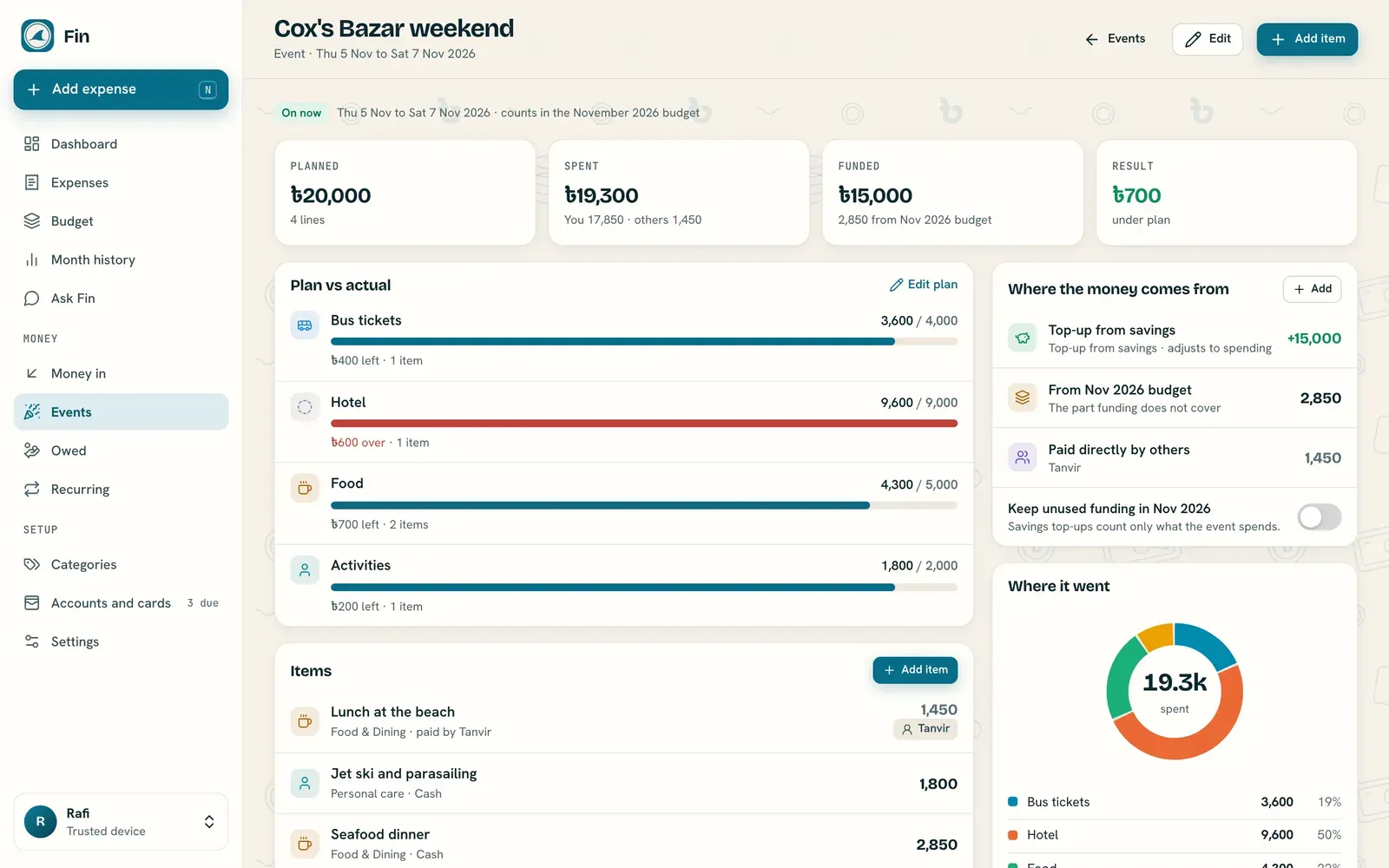
How it is built
Cloudflare Workers and D1, written in plain JavaScript with no framework and no build step.
- One rules engine runs in both the browser and the server, so the phone and the server never disagree on a number.
- It installs on the phone as an app, works offline and signs in with an email link.
- Hosting is free. The only paid part is the Claude API, behind a built in US$10 monthly cap that switches to the free model when reached.
The AI
AI proposes and I confirm. It never changes a budget or a saved record on its own.
Typed entries
Claude Haiku 5.5 with structured output. About 3 s and about US$0.0006 per entry.
Ask Fin
Claude Sonnet 5.5 reads a cached summary of all the data, about 9,000 tokens, and answers in 8 to 18 s.
Backup
Llama 3.3 70B on Cloudflare's free AI, then a simple built in parser, so entries still work when every AI option is down.
Another AI product I built solo for Banglish speakers: MyMod, an AI sales assistant for Facebook sellers.
Numbers
The build, in numbers.
- About 4,300 lines of code
- The migration matched the old app in every month, with 0 differences
- The card cycle rule was checked against every calendar day from 2026 to 2028
- Lighthouse mobile went from 74 to 98; desktop is 100
- The server answers in 40 to 140 ms and the landing page loads in about 0.4 s
What broke
What went wrong during the build, and what it changed.
- Login emails bounced because the mail host was working from an outdated blocklist.
- The free Cloudflare AI allowance ran out on day one. That is why Fin has three fallback layers.
- The free database plan allows only about 50 queries per request, so syncs are now batched.
- iPhones zoomed into small inputs and pushed panels under the status bar.
- One CSS rule kept a chart tooltip from hiding.
- Safari would not play video until the server supported partial file requests (HTTP Range).
- Cloudflare was injecting an analytics script into the page.
- The money rules for events took the most thought of anything in the build.
Three days
Day by day.
Design
Design and a clickable prototype.
Build and migrate
The build, migrating the old data and checking it month by month, and the landing page.
Events, mobile, Claude
Events, a mobile audit and the switch to Claude.