 Shahria Emon
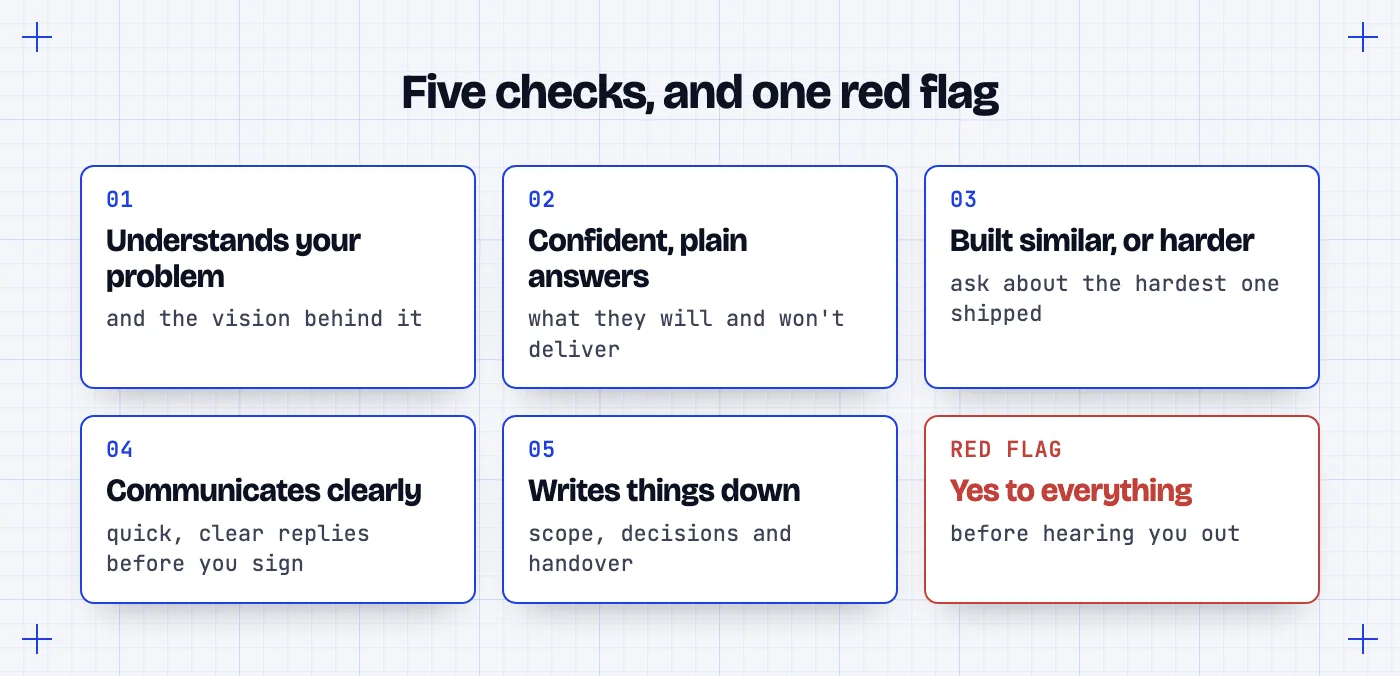
Most guides on how to choose a software development company are written by agencies, and they all end the same way: choose us. I've spent years on the delivery side of software projects, helping deliver more than 185 of them, and I've seen what separates the projects that go well from the ones that don't. It's rarely the tech stack and almost never the slide deck. It's five things you can check in the first few calls.
How do you choose a software development company?
Check whether they understand your problem and your vision, whether they speak with earned confidence about what they'll deliver, whether they've built something similar or at least something as hard, how clearly they communicate, and whether they document. And walk away from any team that agrees to everything before hearing you out.
Why choosing badly is expensive
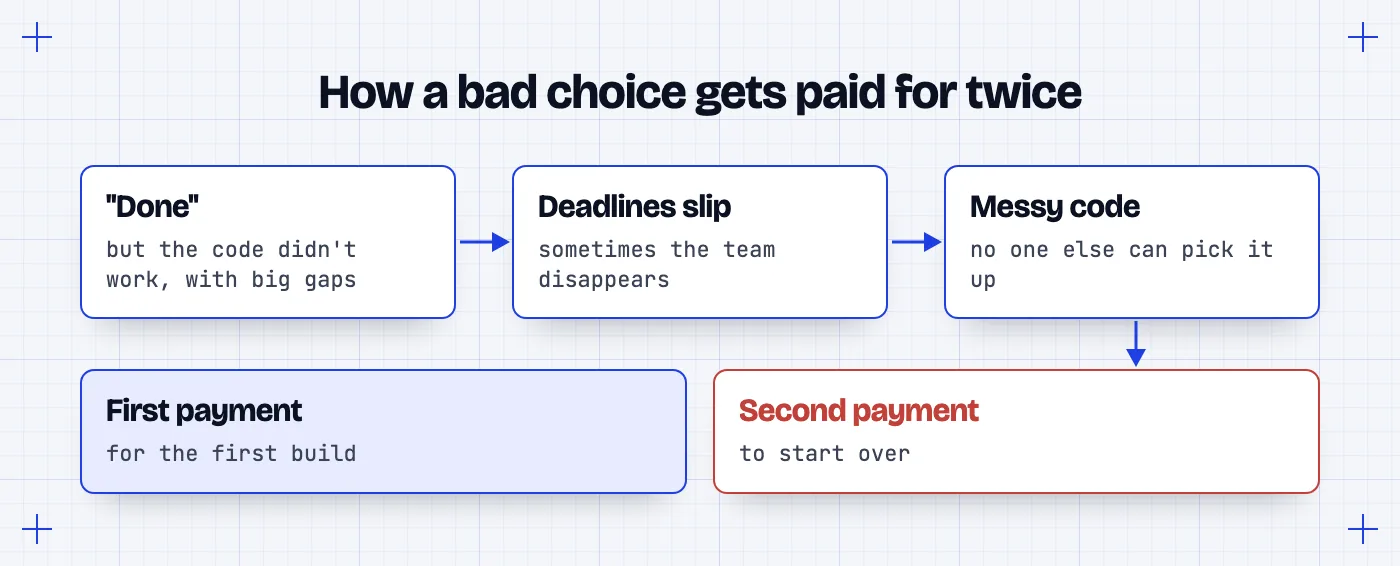
I've seen the same story many times from founders who came to me after a previous team. The team said the work was done, but the code didn't work, and a closer look found big gaps. Deadlines kept slipping. Sometimes the team disappeared halfway through. And the code was so messy that no one else could pick it up, so the founder paid twice: once for the first build, and again to start over.
1. They understand the problem, not just the feature list
A good team asks why before how. Who is this for, what happens if it doesn't exist, what does success look like in six months. If the first call is only about screens and features, they're quoting a list, not solving your problem.
What to look for: they can explain your project back to you in their own words, including the vision behind it, and the explanation is right.
2. They're confident about what they'll deliver, and they say it plainly
Confidence is not the same as agreeing. A confident team tells you what they will deliver, what they won't in the first version, and what they're unsure about until they've looked closer. Vague answers to direct questions are a warning.
What to look for: clear statements like "this part is straightforward, this part needs a small test first", not "we can do anything".
3. They've built something similar, or something harder
The best sign is a delivered project like yours. If they don't have one, look for projects that were challenging in the same way: real-time data, payments, integrations with difficult systems, high reliability. A team that has handled hard problems before will handle new hard problems better than a team that has only built simple ones.
What to look for: ask them to walk you through the hardest project they've shipped and what went wrong in it. A team that can't name anything that went wrong hasn't been honest with itself.
4. They communicate clearly and often
Most failing projects fail quietly first. Updates get shorter, questions go unanswered, and the founder finds out late. Pay attention to how the team communicates before you sign, because it doesn't improve after.
What to look for: quick, clear replies during the sales stage, and a stated rhythm for updates once work starts.
5. They write things down
Clear documentation protects you. A written scope, written decisions and a written handover mean the project doesn't live only in one developer's head. If that developer leaves, or the team changes, your product survives.
What to look for: a written proposal that matches what you discussed, and a clear answer to "what documentation will I have at the end?"
The red flag: yes to everything before you've finished talking
The biggest warning sign I know is a team that says yes to everything before listening to the whole thing. Every real project has trade-offs: time, scope, risk. A team that agrees instantly either hasn't understood your project or plans to deal with the problems later, at your expense. Good teams ask questions first and say yes second.
A quick checklist for your next call
- Can they explain your problem and vision back to you correctly?
- Do they state clearly what they will and won't deliver?
- Have they shipped something similar, or something as hard?
- Are they responsive and clear before you've signed?
- Will you get written scope, decisions and handover?
- Did they ask questions before saying yes?
If a team passes all six, the rest is details. If they fail the last one, the rest doesn't matter.
You can read about real builds and the lessons from them in my writing section.
Choosing a team for your next project and want a second opinion? Message me on WhatsApp and tell me what you're building.