 Shahria Emon
If you're looking for a Solana development company, most of what you'll find is agencies ranking themselves. I came back to coding in 2023 through Solana development, and I've built on it since, including a full trading bot controlled from Telegram. Here is what I'd check before hiring anyone to build on Solana, and the mistake I'd watch for.
What should you look for in a Solana development company?
Two things above everything else: whether they can handle transaction speed in practice, and whether they set honest expectations about what the network will and won't do. After that, look for delivered Solana work, clear communication and written documentation.
What I built on Solana
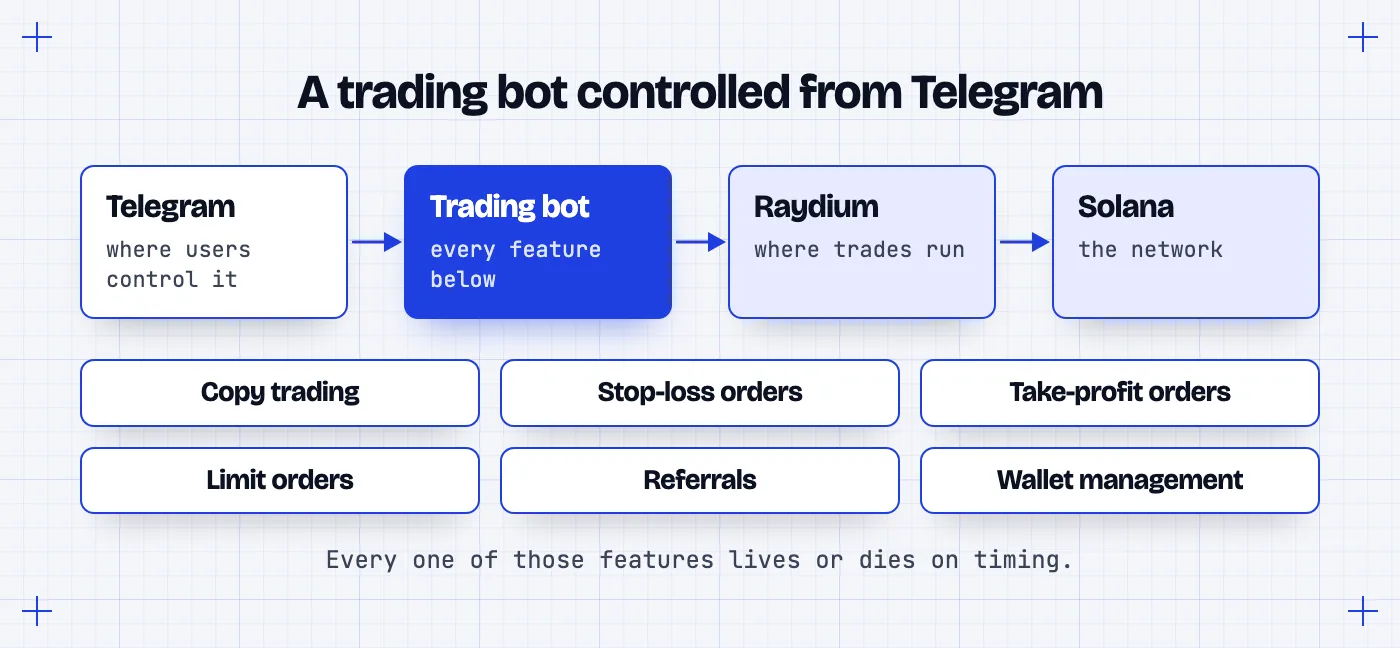
A trading bot that users control entirely from Telegram, trading on Solana through Raydium. It handled:
- copy trading
- stop-loss orders
- target (take-profit) orders
- limit orders
- referrals
- wallet management
Every one of those features lives or dies on timing. A stop-loss that fires late is a loss that got bigger. Copy trading that lags behind the wallet it copies buys at a worse price. That's why speed is my first check.
Why is Solana development different?
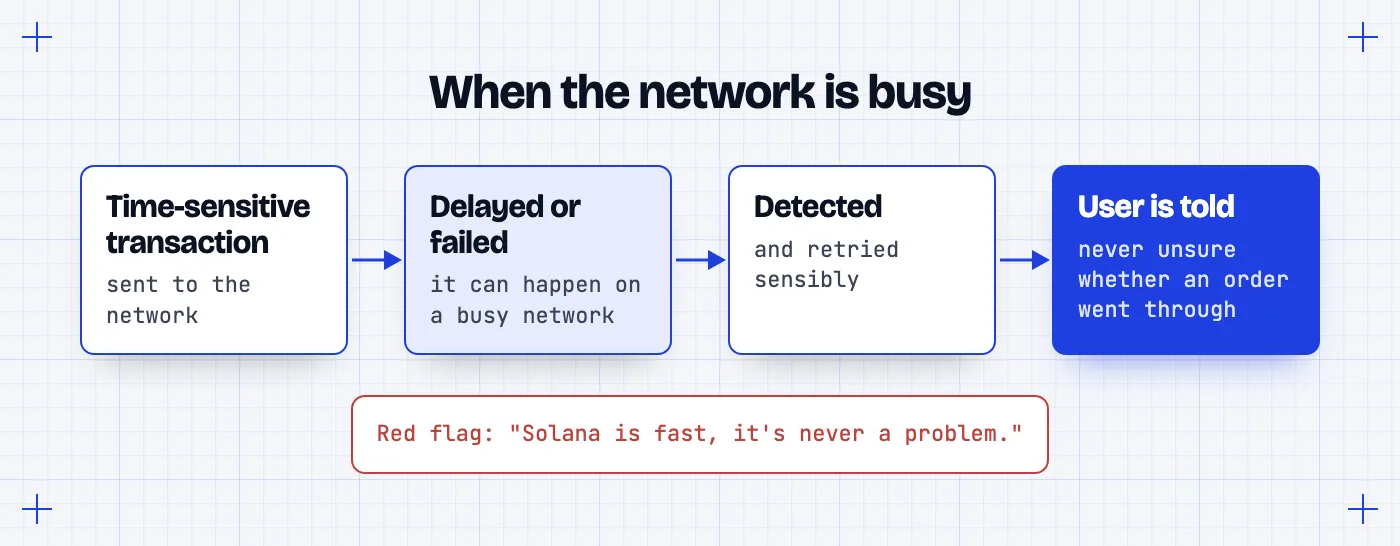
Speed is the product. Solana is fast and cheap, which is why trading tools are built on it. But fast doesn't mean guaranteed. When the network is busy, transactions can be delayed or fail, and a trading feature has to deal with that cleanly: retry sensibly, report honestly and never leave a user unsure whether an order went through.
Fewer resources. When I started in 2023, there were far fewer guides, examples and ready answers for Solana than for Ethereum. Problems that had a well-known answer on Ethereum often needed working out from scratch. A team that has already worked through those problems is worth a lot.
Check 1: can they handle transaction speed?
Ask them directly how they make sure a time-sensitive transaction lands. A good answer covers what happens when the network is busy, how failed or delayed transactions are detected and retried, and how the user is told what happened. A team that says "Solana is fast, it's never a problem" hasn't shipped anything time-sensitive.
Check 2: do they set honest expectations?
The best Solana teams tell you clearly what to expect: how fast is realistic, what can go wrong on the network, and what the product will do when it does. If every answer is "instant" and "guaranteed", that's a sales pitch, not a plan. On a live network, honest expectations protect you and your users.
Check 3: the basics still apply
Everything that matters when choosing any software development company matters here too: do they understand your vision, have they built something similar or as hard, do they communicate clearly, and will you get written documentation at the end.
The red flag
The biggest red flag is a team that can't state realistic expectations. If they promise that every transaction will always land instantly, they either haven't built on Solana under real load or they're telling you what you want to hear. Either way, you'll find out after launch, with real money involved.
Questions to ask on the first call
- What Solana projects have you shipped, and what was hardest about them?
- How do you handle transactions when the network is congested?
- How will users know whether an order went through?
- What speed should I realistically expect, and when won't it hold?
- How are user wallets and keys protected?
- What documentation will I have at the end?
Building something on Solana and want a straight answer on what's realistic? Message me on WhatsApp and tell me what you're planning.